Home Fire Safety Tips
Learn practical fire safety tips to reduce common fire risks, how to keep common areas in your housing estate hazard-free, and what to do in the event of a fire.
General fire safety tips
Preventing kitchen fires
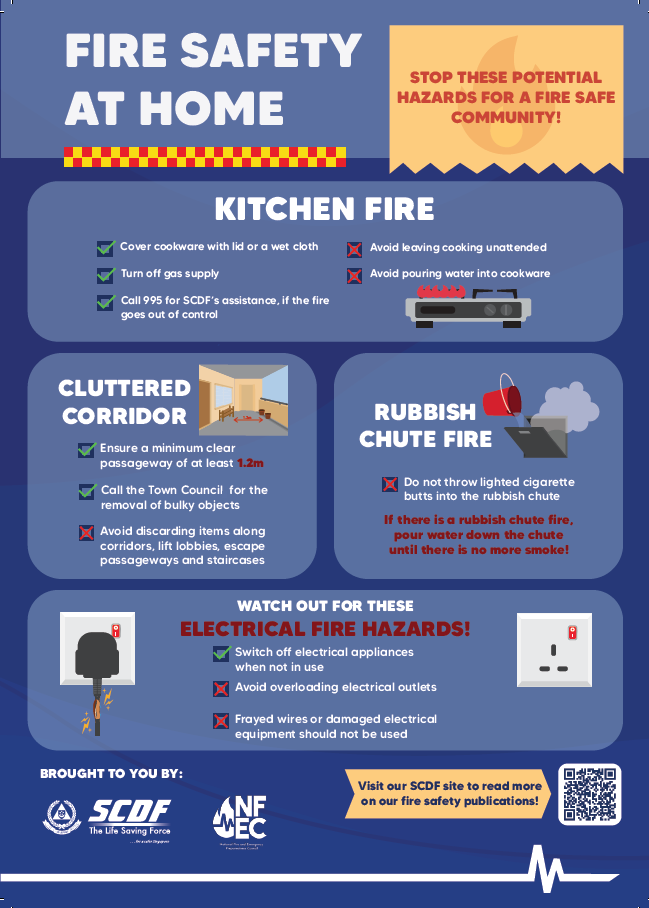
Do not leave cooking unattended. Turn off all cooking appliances and unplug them when not in use
Keep stove-tops, cooker hoods and ovens clean and free of grease
Keep flammable products/perishables (e.g. cooking oil and wine) and combustible materials (e.g. paper and batteries) away from heat sources such as the stove
Preventing fires of electrical origin
Do not overload electrical outlets and always switch off electrical appliances when they are not in use
Check for frayed wires and exposed wiring; if any are found, have the wires replaced immediately
Do not leave batteries or devices to charge unattended for an extended period of time or overnight. Do not tamper with, modify, or attempt to repair the batteries or devices on your own. Always follow manufacturers’ instructions for charging and storage. Stop using the battery if you notice any damage or deformities
Preventing fires from lighted materials
Do not throw burning embers (e.g. hot charcoal) and cigarette butts into rubbish chutes without fully extinguishing them first
Do not place window curtains or any combustible materials near praying altars, stoves or lighted materials
Keep lighted candles away from paper or cardboard decorations, curtains and furnishings; they should be placed in stable holders on a heat-resistant surface so that they will not fall over
Keep lighters, matches and candles away from children
Children playing with sparklers must be closely supervised by adults; sparklers should be lit at arm’s length and unused ones are to be sealed in boxes and kept away from heat sources.
Assess potential fire hazards in your home and receive tailored fire safety advisories using the Home Fire Safety Checker (opens in new tab).
Guidelines on use of common areas
Fire hazards at common areas in HDB estates can hamper firefighting efforts, fire evacuation and the conveyance of patients during medical emergencies.
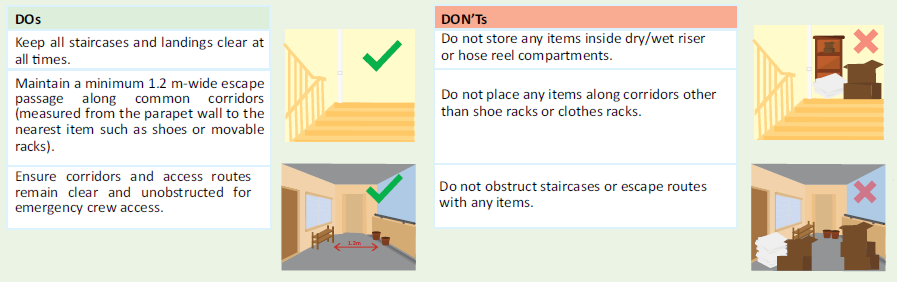
Follow the guidelines below to keep common areas hazard-free:
Home Fire Alarm Device/Smoke detectors
A Home Fire Alarm Device (HFAD) is an automatic smoke or heat detector that provides early warning of a fire by sounding an alarm to alert occupants, enabling them to take early action by putting out the fire or evacuating before the fire escalates.
Since 1 June 2018, the installation of an HFAD is mandatory for new residential premises as well as existing residential premises carrying out fire safety works. Nevertheless, existing homeowners are strongly encouraged to install HFADs for their own safety.
Tips on HFADs
Install HFADs on the ceiling near sleeping areas and other places where fire is likely to occur
Test and clean HFADs regularly based on the manufacturer's instructions
Change batteries in the HFAD yearly or when indicated by the device, whichever is earlier
What to do when a fire breaks out
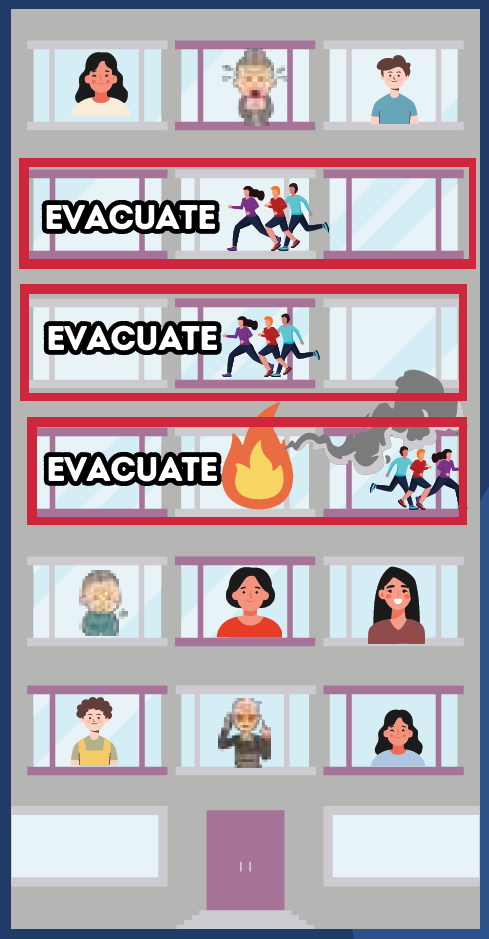
Evacuate immediately if you are on the fire floor or within two floors above it
If you are on other floors, it is generally safer to remain inside your unit with all windows and doors closed, unless instructed otherwise by the authorities
Fight the fire only if you are able to do so without endangering yourself or others
If you are unable to extinguish the fire, evacuate your home immediately and call 995 for assistance. If possible, close the door of the affected room and the main door as you leave to contain the fire
If you are unable to escape:
Stay low and keep close to the ground, as smoke rises during a fire
Run to the room furthest away from the fire, shout for help to alert others and call 995 if you are able to
Shut the door behind you and seal the gap beneath the door with a wet towel or rug to prevent smoke from entering
Stay calm and do not attempt to jump out of the building
Rubbish chute fires
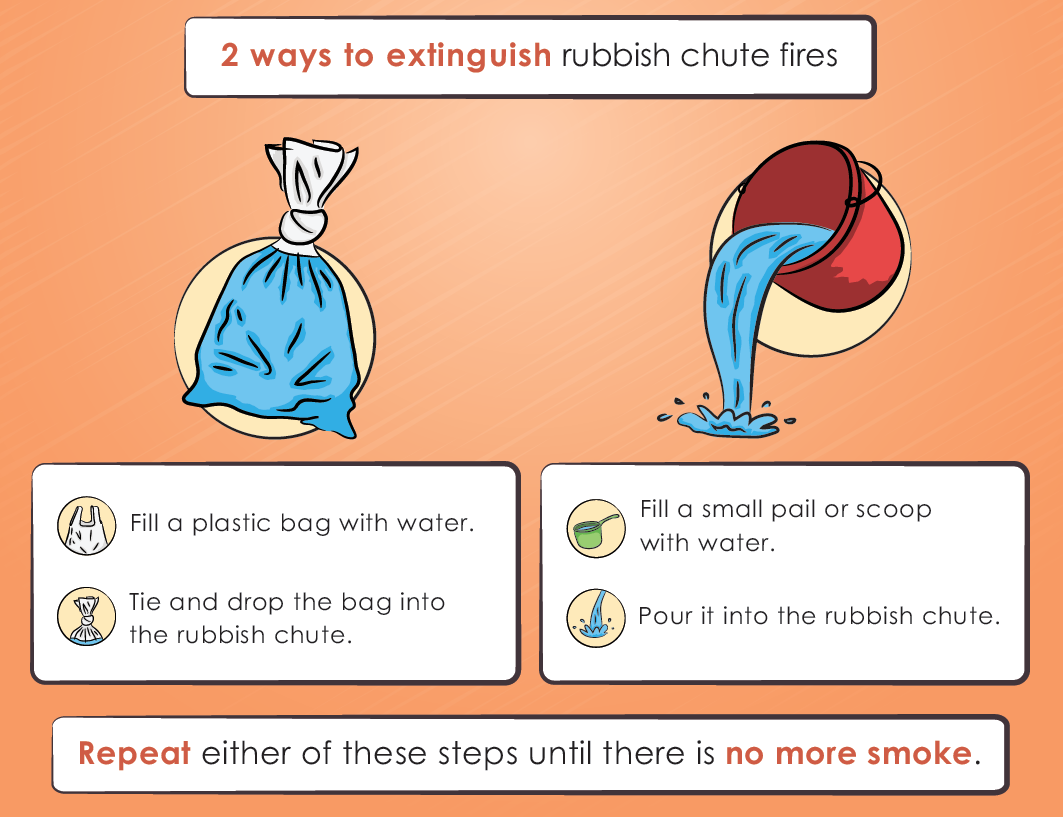
Rubbish chute fires are usually small and can be easy to extinguish. Refer to the infographic below to learn how to put out rubbish chute fires: